What Does it Mean to be Reformed Baptist?
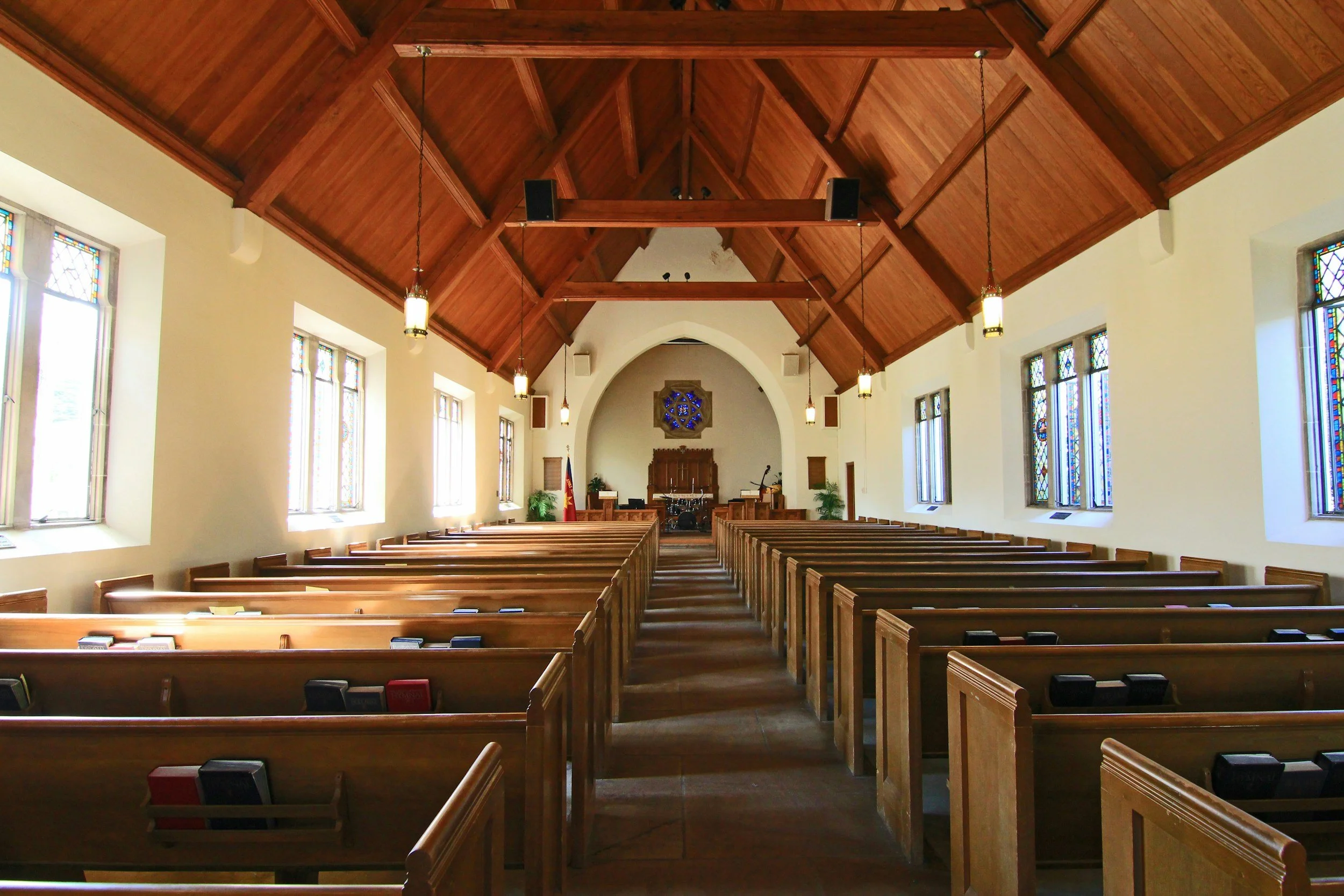
Note: This was originally published as a blogpost on the website of Grace Reformed Baptist Church of Ramey, Pennsylvania. I am providing it here with minor edits as it could be beneficial for others.
Introduction
We live in a world in which there are hundreds (if not thousands) of different denominations and organizations all claiming the title of Christian. As such, in some places it may be difficult to find certain types of denominations or organizations or groups that are a bit smaller in nature. For instance, in our current home of Philipsburg, Pennsylvania, there are just under 20 churches and most of them represent different denominations, different theological beliefs, and different core values.
Out of the 20 available churches in Philipsburg, you’ll find about 16 different denominations with distinct theological beliefs and different core values (and that doesn’t include the several churches that exist around Philipsburg). And while there has consistently been a push for ecumenism within our community, the fact is that each church holds their denomination distinctives as important, which is why we have 20 churches rather than one larger church in our community (none of which are confessionally Reformed—let alone confessionally Reformed Baptist).
Now, there are two ways that I could explain what it means to be a Reformed Baptist: the first would be to systematically explain the differences between a Reformed Baptist Church and all the other churches in our community. This would be the most comprehensive way to give an apologetic for Reformed Baptists, but it is time-consuming and really ought to be done in a more as-needed basis. The second way, which is what I endeavor to do here, is by giving some core and distinctive ideas that pertain to most Reformed Baptist churches.
Distinctive Doctrinal Beliefs and Practices
As Reformed Baptists, there are a handful of core beliefs that differentiate us from other denominations and other Christians (note that I am not providing a complete statement of belief here, these are distinctives of Reformed Baptists). These beliefs are summed up in four categories. Reformed Baptists are:
Confessional – to be a confessional church means that we affirm a statement of faith. Grace Reformed Baptist Church of Ramey, Pennsylvania, which I previously pastored, actually affirmed two statements of faith—we affirmed the Baptist Faith & Message 2000, which is the Southern Baptist Convention’s statement of faith, and the 1689 London Baptist Confession of Faith, which is the historical statement of faith that many Reformed Baptist churches affirm. The 1689 London Baptist Confession of Faith provides a comprehensive statement of what exactly Reformed Baptists believe to be a biblically accurate and comprehensive understanding of orthodox Christianity.
Covenantal[1] – this concerns our overarching understanding of the Bible. Reformed Baptists understand Scripture from a Covenant Theology perspective (as opposed to a dispensational perspective). Covenant Theology understands the overall storyline of Scripture through the concept of covenants—i.e., the Covenant of Redemption, the Covenant of Works, and the Covenant of Grace. In eternity past, the Trinity decreed the Covenant of Redemption; the Covenant of Works speaks of the state that Adam and Eve lived in while in Eden; and the Covenant of Grace (which includes the covenants of the Old Testament that foreshadow the New Covenant; and the New Covenant, which is inaugurated formally in the New Testament).[2] This understanding of the overarching storyline of the Bible had been a predominant view amongst Baptists before the mid-19th Century, however, it currently is a minority view amongst Baptists today.[3]
Adherents to the Regulative Principle – during our meetings for worship, Reformed Baptists believe that the Regulative Principle best allows Christians to worship properly. Simply stated, the Regulative Principle states that the Bible dictates the worship of the church—not pragmatism, not entertainment, and not the surrounding culture. In corporate worship, we only do what Scripture commands us to do—thus, our worship is simple, it stresses the ordinary means of grace, it highlights Scripture (both its reading and preaching), emphasizes prayer, and gives an opportunity for believers to partake in the ordinances (both Baptism and the Lord’s Supper). Note that Reformed Baptists believe that the ordinary means of grace are more than merely symbolic gestures—there is real, spiritual benefit and meaning behind these acts when done in faith and empowered by the Holy Spirit.
Adherents to Baptist Polity – Reformed Baptists wouldn’t be Baptists if we didn’t hold to Baptist distinctives including: (1) biblical authority—the Bible alone is inspired and infallible and is the church’s final authority, (2) the autonomy of the local church—no outside organization has any control over the local church, (3) the priesthood of all believers—anyone who truly believes has access to God through Jesus Christ, (4) two offices—Scripture only allows for pastors (also known as elders) and deacons, (5) individual soul liberty—each individual has to personally choose Jesus, (6) separation of church and state, and (7) two ordinances—the Lord’s Supper and believer’s baptism by immersion.
These distinctive doctrinal beliefs and practices are rooted both in Scripture and the Reformation, which ties Reformed Baptist churches to not just the historical church, but ultimately back to Christianity as we see it in the New Testament. (Again, this isn’t comprehensive, but shows some of the distinctive ideas that Reformed Baptists adhere to.)
Beyond the distinctive ideas that shape our churches, Reformed Baptists would simply say that we are Bible-centered, doctrinally conservative, and Gospel-focused churches that embrace the Protestant Reformation while still holding to the Baptist understanding of believer’s baptism and local church autonomy.
Historical Information
Now, I’ve mentioned the historical nature of some of our distinctive beliefs, which may have caused you to ask what where did the Reformed Baptist movement start? In the 1500s and early 1600s, the Roman Catholic Church fell into corruption, superstition, and moral depravity; and when theologians began contrasting what Scripture actually taught with the Roman Catholic Church’s doctrine, a movement to reform the church started. Unfortunately, the Roman Catholic Church refused to repent (and continues to refuse to repent from its aberrant teachings) and thus, the Protestant Reformation gave rise to several different groups or denominations of churches who initially sought to simply teach and preach what the Bible actually says. All Protestant Churches at the time shared doctrines that were summed up in the Five Solas—Scripture alone, Christ alone, grace alone, faith alone, and the glory of God alone. Really, the Protestant Reformation was simply a movement away from the heresy of the Roman Catholic Church towards the orthodoxy of the New Testament.
Throughout modern church history, protestant churches have always battled the temptation to drift into theological liberalism as a result of sin. More recently, some denominations have stopped fighting the temptation and have succumbed to theological liberalism (e.g., the Presbyterian Church (USA), Evangelical Lutheran Church of America, and the Cooperative Baptist Fellowship), others have stayed true to orthodox Christianity (even if struggling to do so for a time; e.g., the Orthodox Presbyterian Church, Heritage Reformed Congregations, the Southern Baptist Convention, and the Presbyterian Church of America). Reformed Baptist congregations are staying true to orthodox Christian beliefs—some are doing so as independent congregations, others have joined specifically Reformed Baptist denominations, and a few, have chosen to affiliate with denominations that aren’t specifically Reformed Baptist.
Reformed Baptist churches stand in the lineage of historically Reformed, orthodox Christian beliefs. They can trace their roots through modern day Reformed Baptists to what used to be called Particular Baptists, which gets its roots from Puritanism and its separation from the previous aberrant and liberal churches of its time.
Historically, there are several well-known Reformed Baptists that have had significant influence on Christianity. Some of the most well-known are: (1) C.H. Spurgeon, late pastor of the Metropolitan Tabernacle, (2) William Carey, missionary to India, and (3) John Bunyan, author of Pilgrim’s Progress.
Conclusion
While much more can be said about what it means to be a Reformed Baptist, this post gives an introduction into what makes Reformed Baptists distinctive from other denominations and other groups of Christians. It is affirmation of the historic 1689 London Baptist Confession of Faith, Covenant Theology, the Regulative Principle, and adherence to Baptist polity that differentiates Reformed Baptists from different Baptists, other Reformed groups, and other denominations.
Ultimately, what every Reformed Baptist is trying to do is to simply worship Jesus how Jesus has taught us to worship Him, understand the Bible accurately, and consistently apply the Bible to every part of our being. We just believe that Reformed Baptist doctrine helps the believer to achieve these goals to the best of their ability for God’s glory.
[1] For sake of clarity, we eschew the concept of Replacement Theology; rather, we believe in what could be called fulfillment theology. See Knox Theological Seminary’s document, “An Open Letter to Evangelicals and Interested Parties: The People of God, the Land of Israel, and the Impartiality of the Gospel.”
[2] Reformed Baptist Covenant Theology differs from Westminsterian Covenant Theology in its understanding of the Old Testament covenants—Westminster holds that the Old Testament covenants are administrations of the one covenant of grace (i.e., sharing the same substance as the New Covenant), whereas Reformed Baptist theology does not equate the Old Testament covenants with the New Covenant but understands them as typological, promissory, and preparatory. Reformed Baptists believe the OT covenants reveal and advance the covenant of grace without being formally identical to it.
[3] Please know that we do not see Dispensationalism vs. Covenant Theology as reasons for separation or rejection of fellowship.